Katía Truijen is a media researcher, curator, educator and musician. Her work is concerned with bringing people together around practices of listening, archiving, and rehearsing alternative urban, technological and ecological futures. Katía is part of Loom, practice for cultural transformation, and curates context programmes for Rewire festival and Ultima festival. Between 2014 and 2021, Katía developed research projects and public programmes at Het Nieuwe Instituut. She is editor of Further Listening. On Adventurous Music and Sound (2026), and co-editor of Epistemic Imaginaries – Learning as Festivity (2025) and Architecture of Appropriation. On Squatting as Spatial Practice (2019).
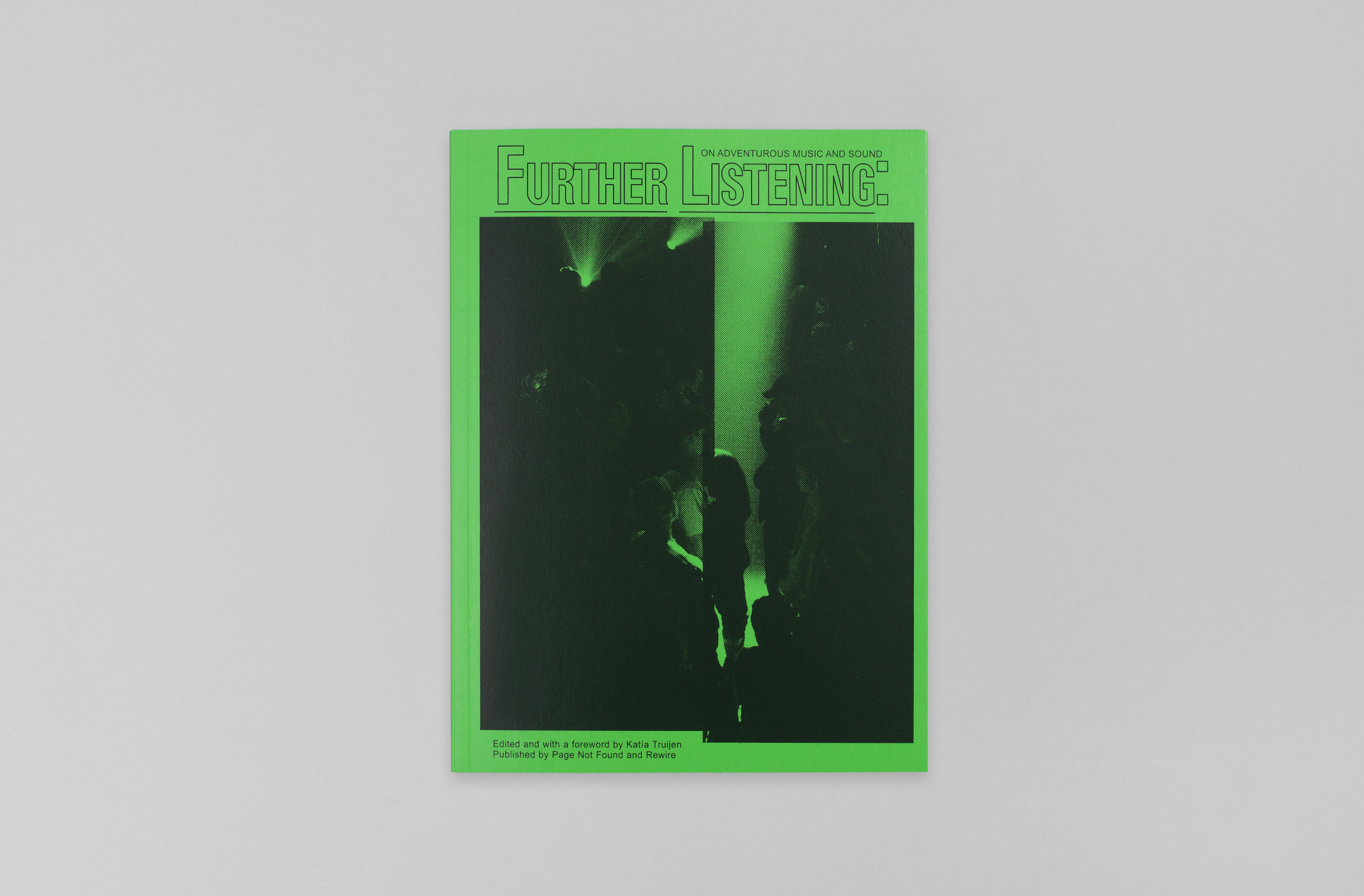
Further Listening brings together myriad artistic voices that have and continue to shape adventurous music and sound. The publication holds conversations with artists, researchers, writers, and organisers, poetic texts, critical essays, archival fragments, text messages, and personal reflections. Organised around four “filters,” the contributions speak about infrastructures for adventurous music (Staging Sound); evolving music technologies, instruments, and forms of environmental listening (Instrumental Ecologies); exchanges across geographies and generations (Times and Territories); and speculative, critical, and forward-thinking listening practices (Further Listening). Published by Page Not Found and Rewire, 2026. Photo by © The Book Photographer.
Situated around its music and performance line-up, Rewire’s context programme aims to open a space for collective reflection, and to bring the various practices of its artists into conversation with one another. Over the last years, the programme was hosted at Page Not Found, The Grey Space in The Middle, West Den Haag, Radio WORM, and The Hague’s city centre. Revolving around the politics and poetics of staging sound, further listening, times and territories, and instrumental ecologies, each day – through conversations, lectures, audio walks, workshops, and listening sessions – examines different listening positions and forms of sonic sensibility in times of ongoing war, colonialism, and environmental collapse.
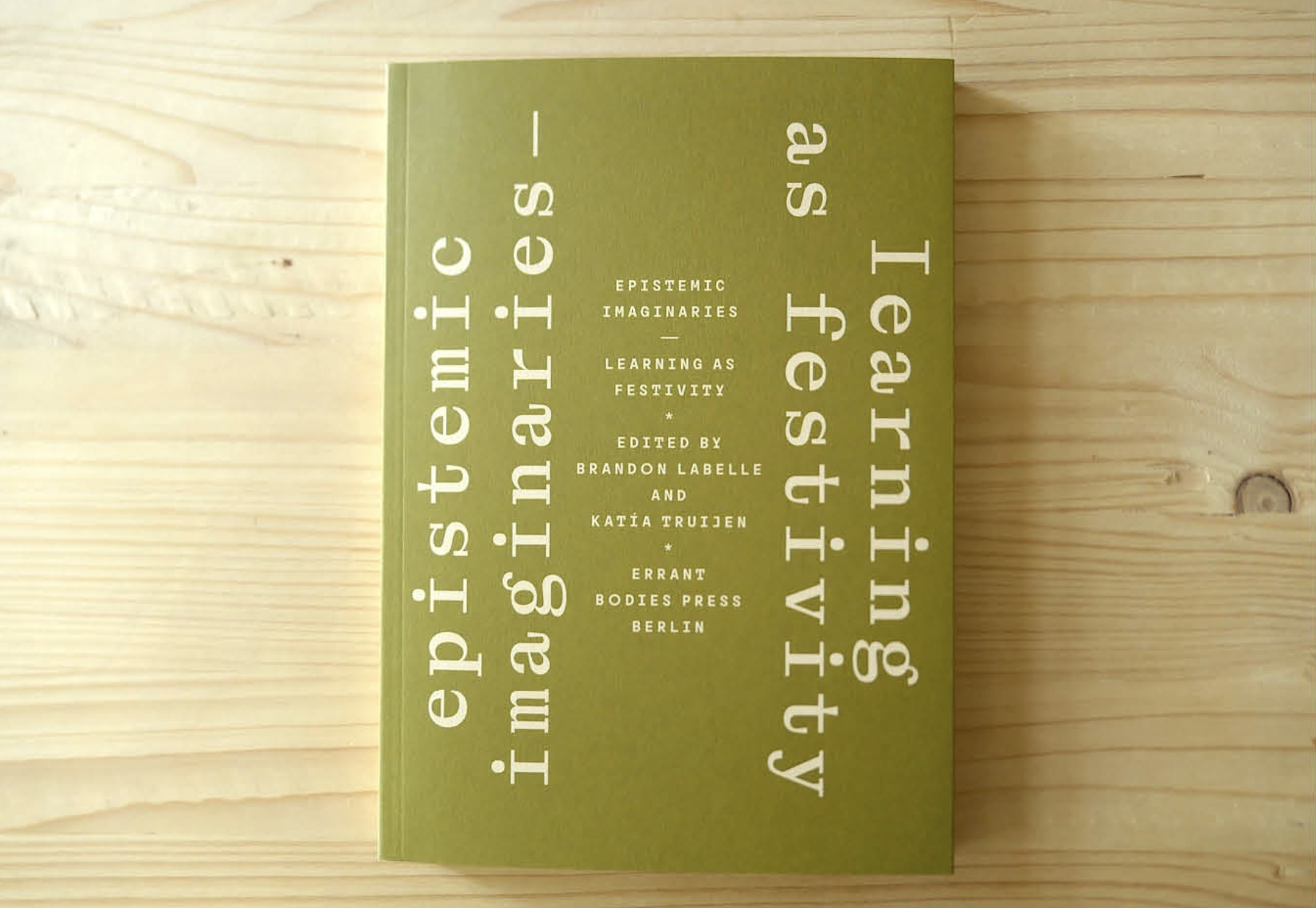
Epistemic Imaginaries brings attention to creative educational initiatives and how alternative learning situations work at reinventing community and related knowledge practices. Central to the publication is emphasizing such initiatives as grounded in festivity, appreciating how they support and celebrate new ways of being together. From feasting on ideas to hosting dissident knowledges, from blending individual and collective work, along with discursive and somatic methods, to growing sustainable knowledge environments and enacting care practices, alternative learning situations are underscored as vital interventions that equate learning with joy, affection and communal flourishing.
Comprised of essays, reflections, conversations and documentation from a range of international contributors and contexts, Epistemic Imaginaries is itself a celebration of the critical, experimental ethos central to doing-education.
Edited together with Brandon LaBelle.
Powered by dialogue and imagination, Loom provides reflections, propositions, rehearsals, and real-world alternatives that bring people together around urgent issues. Loom develops open, experimental formats to help find and unlock the transformative potential of people, places and organisations. Loom creates unexpected ties between independent initiatives and institutions, weaving together people and practices with roots in different worlds.
Loom facilitates conversations, conducts research, curates exhibitions and public programmes, publishes books, consults organisations and develops shared learning experiences.
Loom is Katía Truijen, Mark Minkjan, Michiel van Iersel, Radna Rumping and René Boer working in close collaboration with an evolving ecosystem of talented and established practitioners.
“We can define rituals as symbolic techniques of making oneself at home in the world. They are to time what a home is to space: they render time habitable.” – Byung-Chul Han, The Disappearance of Rituals, 2020.
As part of Rewire festival 2022, the RITUAL programme invited the audience into an experimental series of gatherings, talks and installations exploring themes such as Resonance, Attention, Technology, Reverberations, Healing and Closure, with contributions by Brandon LaBelle, M Lamar, FUJI|||||||||||TA, Debit and Kristin Norderval at Page Not Found and Korzo, and a RITUAL zine with their contributions and by Liz Harris (Grouper) and Momtaza Mehri, designed by Fallon Does and riso printed by Terry Bleu. Curated together with Jo Kali.
For the Record is the outcome of a public research initiative conducted through location-based and live formats by Het Nieuwe Instituut and a large number of collaborators. For over three years, the project investigated how contemporary music video culture operates as a public space for consumerism, activism and emancipation, by exposing existing realities and by imagining alternatives. In order to do so, For the Record documented and reflected upon the technologies, spatial design and forms of representation deployed in music videos and live events, using public programmes, video production and tools for annotation as its main methodologies.
FUNDAMENTAL ACTS advocated for architecture and space dedicated to the fundamental rituals which allow us to find meaning collectively and individually; to live, learn, celebrate, love and mourn together. Inspired by Italian radical architects Superstudio’s proposal from the early seventies to centre stage the great themes of life in architecture, FUNDAMENTAL ACTS was an invitation to revalue, honor, transform and accommodate the founding rituals of society, and to redefine generous spaces in which they can flourish.
This programme of spatial and temporal activations for the Mont des Arts in Brussels took place between June 21 and July 4, 2021. With installations, activities and performances by Raumlabor, Something Fantastic, Studio Donna van Milligen Bielke, Jean Benoît Vetillard, Carbonifère, WAI thinktank, Giulia Ricci, La Revoluzione Delle Seppie, Velma Spell, Florian Fischer, Spazio Cura, Les Ateliers Claus, Farida Amadou, Ignatz, LY Foulidis, Maak & Transmettre, Queer Commons. Curated together with Traumnovelle and humbble, and commissioned by urban brussels.
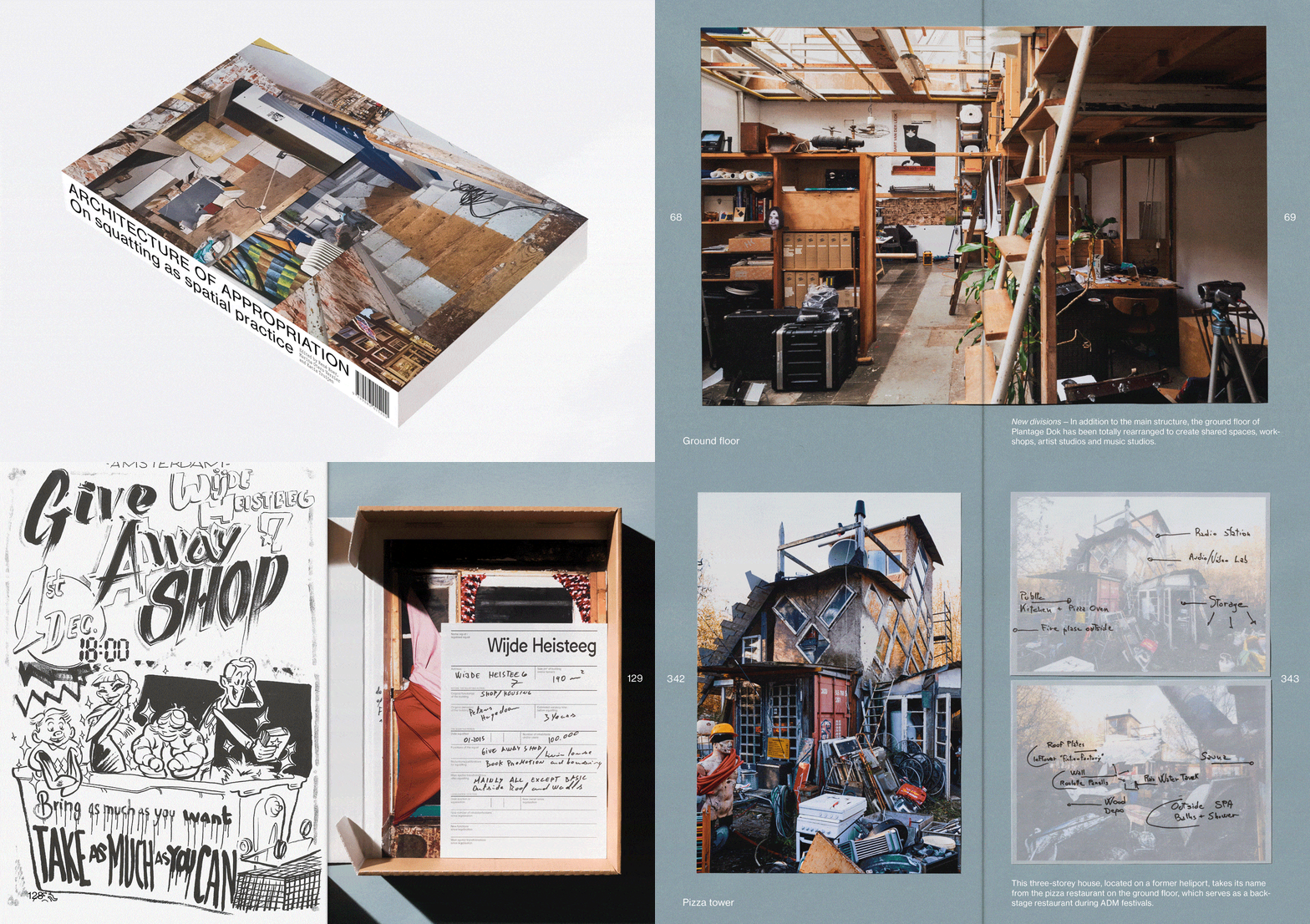
Architecture of Appropriation. On Squatting as Spatial Practice acknowledges squatting as an architectural practice. The publication analyzes a series of case studies through architectural drawings, interviews, and archival material to build up a record of past and current struggles, spaces, and oral histories, forming the basis for a new acquisition policy for the State Archive for Dutch Architecture and Urban Planning. The project brings the expertise of the squatting movement together with architects, archivists, scholars, and lawyers, to discuss approaches to the research, archival practices and representation of precarious, non-author-based, and often criminalized spatial practices in the institutional framework of an archive and museum. Co-edited with René Boer and Marina Otero Verzier. Published by Het NIeuwe Instituut.
get in touch via mail [at] katiatruijen [dot] com